 Written by Jared Kent
 Audited by Admin
🔍 82+ Products Analyzed
★ 23k Reviews Evaluated
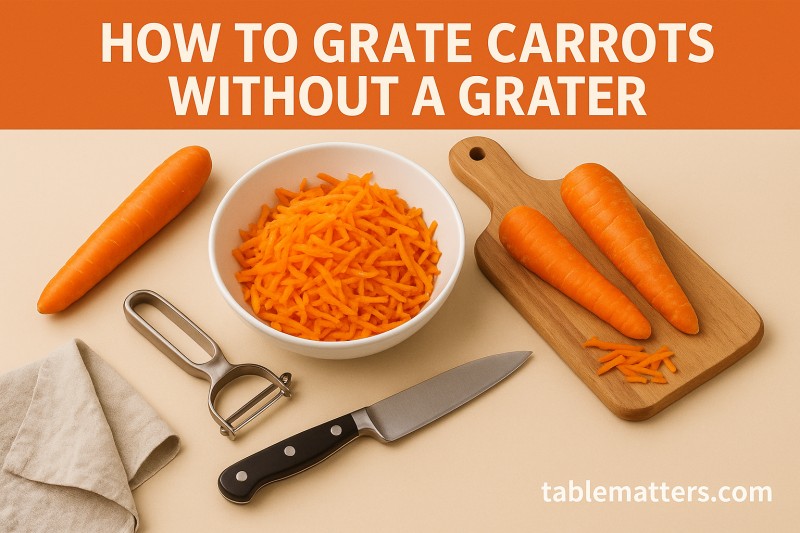
Lots of popular recipes like carrot cake, coleslaw and so many more call for grated carrots. But what's the best method to actually grate carrots? The most common way is to use a cheese grater or box grater, but that can be time consuming and is hard on your hands and arms, especially for large quantities of carrots. So, if you don't feel like going through the hassle of grating carrots on a cheese grater, or just don't have one, here are some good ways to grate carrots without a grater. Read on to learn more about grating, shredding and peeling carrots!
Grating Carrots with a Food Processor
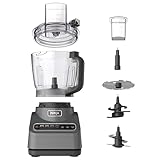
A great way to grate a lot of carrots quickly and easily is to use a food processor. Most food processors come with a grating attachment, a disc with holes that sits near the top of the bowl and rapidly spins to create uniformly grated carrots. To grate carrots this way, start by peeling the skin off fresh carrots with a vegetable peeler. Then, simply fix the grating attachment onto the top of the food processor and lock the lid. Finally, feed the carrots through the tube on the lid, hit the pulse button on the food processor, and watch the grated carrots fall instantly into the base.
Depending on the food processor you have, there may be a couple of different grating or shredding attachments available. The smaller the holes in the attachment, the smaller the grated carrots will be. For recipes where the carrots are kept raw, like coleslaw, a larger grate is better. For some other recipes like carrot cake, a smaller hole would be better. If you're unsure about the different attachments or how to use them, be sure to check out your food processor's instruction manual for step-by-step instructions.
The ease and speed of the grating attachment makes grating carrots in the food processor a great choice for processing a lot of carrots at once. However, setting up and cleaning the food processor can be a pain, so it's not the best method if you only have small quantities of carrots to grate.
Grating Carrots with a Zester
To grate carrots very finely, the best way is to use a microplane, or zester. The most common use for these tools is to zest the outside of citrus fruits, but they're also awesome for grating garlic, ginger, chocolate and nutmeg. To grate carrots with a microplane, peel whole carrots then run them up and down the zester. The zester will produce very short, fine grates of carrot and will probably also create some carrot juice. Being so fine, these grated carrots are best used in sauces, dressings or marinades. Grating carrots with a zester won't get you a lot of grated carrots very fast, but the zester is quick to clean, so it's a good option for a small amount of carrots.
Shredding Carrots with a Mandoline Slicer
Another great tool to help you quickly shred carrots is a mandoline slicer. A mandoline slicer is a traditional Japanese tool, used to rapidly slice vegetables into uniform pieces. It's a long piece of rectangular plastic, with a razor-sharp blade in the middle, that you run vegetables across, and the slices quickly fall onto the cutting board below. Many mandoline slicers have julienne attachments with sharp teeth that allow you to cut thin strips of vegetables. To shred carrots on a julienne attachment, hold the carrot at a 45-degree angle and pass it through the teeth of the attachment. Whenever you're using a mandoline slicer, be very careful because the blades are extremely sharp.
Shredding Carrots with a Julienne Peeler
A favorite tool of chefs for shredding carrots is a julienne peeler. These look just like regular vegetable peelers but have tiny teeth on them. They make shredding carrots as easy as running the peeler down the length of the carrot to make long, even shreds of carrot. It's very fast, and cleanup is minimal.
Shredding Carrots by Hand
If you find yourself without any of the specialized shredding tools mentioned above, you can always shred carrots by hand. All it takes is a peeler, a cutting board, and a sharp knife. Peel the whole carrots, cut them into planks, then slice those planks into thin strips.
Buying Shredded Carrots
Of course, if you have a recipe that requires shredded carrots, there's always the zero-prep, zero-tools-required method of buying already shredded carrots from the grocery store. The flavor of these carrots may not be as good as shredding them yourself, and they'll be a little more expensive than buying whole carrots. However, if you're making large quantities of coleslaw, potato salad, or some other recipe with shredded carrots, the time and energy saved could be well worth it.
Grated Carrots vs. Shredded Carrots

Although the terms are often used interchangeably, grated carrots and shredded carrots are not the same thing. The main difference is the size. Grated carrots are smaller and crumb-like, they look more like pieces of couscous, whereas shredded carrots are more intact and look like small strips of carrot. For some recipes, like carrot salad or pickled carrots to garnish a dish, shredded carrots work better. In other recipes like coleslaw or carrot cake, grated or shredded carrots are interchangeable. Most food processors have separate attachments for grating and shredding carrots, with the holes in the shredding attachment being larger.
Why do you Need to Peel Carrots Before Grating?
The outer skins of whole carrots have a bitter flavor that can throw off whatever you're cooking. For best results, always peel your whole carrots and compost the skins.
What to Do with Carrot Nubs after Grating?
Whenever you grate or shred carrots, you inevitably end up with some little nubs that are left over. Do you just throw those away? Of course not! These are great for snacking on, but you can also bag them up, freeze them, and use them in a vegetable stock later. It's a great way to reduce food waste and make your cooking better with homemade stock.
View More in:
Why Trust Us?
Meet Our Kitchen Experts
At TableMatters.com, we’re committed to providing reliable, research-backed expert cooking tips and honest cookware reviews you can trust. Our content is created by trained chefs, experienced food writers and kitchen equipment experts who test recipes, compare tools and analyze ingredients with real-world accuracy.
Whether you’re searching for reliable vegetarian meal ideas, step-by-step cooking guides or detailed product comparisons, TableMatters.com provides expert-driven, easy-to-follow content designed to help every home cook cook smarter, eat healthier and enjoy better results.