 Written by Jared Kent
 Audited by Admin
🔍 103+ Products Analyzed
★ 9k Reviews Evaluated
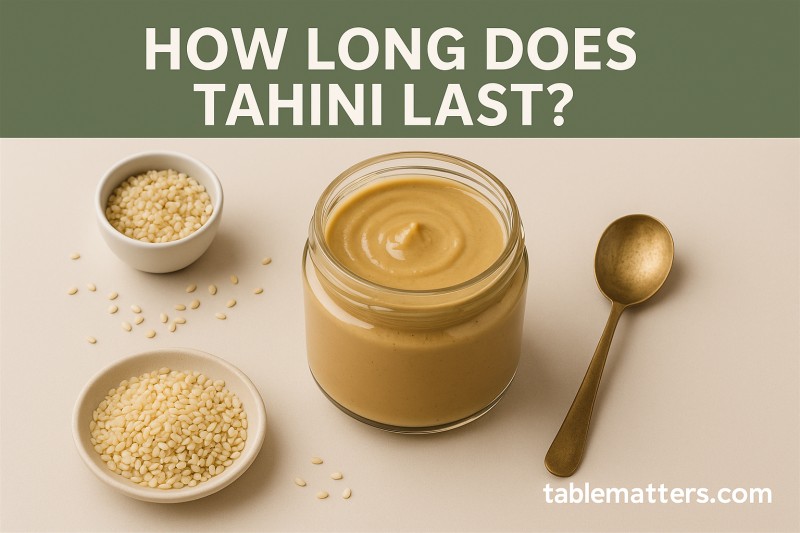
If you've ever made yourself hummus or baba ghanoush, you likely have a jar of tahini that's been hanging for a while and are wondering just how long does tahini last? Do you need to buy a new jar for the next round of hummus?
The short answer: probably not. Luckily, this tasty and versatile condiment has a very long shelf life. An unopened jar can last several years when stored properly and even open jars are good for several months and up to more than a year.
Let's dig into why tahini lasts so long and the best ways to store it for maximum quality.
What Is Tahini and Why Does It Last so Long?
Tahini, a versatile condiment from the Middle East, is a paste of lightly roasted, ground up sesame seeds with the outer hulls removed. It has a rich, creamy texture similar to peanut butter, but has a distinctive nutty, earthy flavor with a touch of bitterness at the end.
Tahini is a staple ingredient in Middle Eastern dishes like hummus, baba ghanoush, halva and many others.
Sesame seeds contain a lot of healthy natural oils, which are brought out in the grinding process. Since tahini is just a paste of sesame seeds and their oils, it is almost pure fat, and it has virtually no moisture. Without moisture, pathogens like bacteria and fungi have an extremely difficult time growing in tahini.
That means that like peanut butter, tahini is resistant to spoilage and will last a very long time.
How Long Does Tahini Last at Room Temperature?
Unopened, a jar of tahini that's stored in a cool, dark place can last 3 or 4 years. Once the jar is opened, it can still be stored at room temperature and will hold its quality for a year or longer.
It is important to keep your tahini covered with an airtight lid to prevent air from getting in and starting to oxidize the oil in the tahini. Oxidation will not make the tahini unsafe to eat but will produce an off color and slowly degrade the flavor over time.
Where to Store Tahini?
Generally, the best place to keep tahini is in a cool, dark cabinet in your pantry with an airtight lid screwed on all the way. Exposure to light and heat will gradually reduce the quality of the tahini, so be careful not to store it next to the oven where it may be exposed to additional ambient heat.
Does Tahini Need to Be Refrigerated?
Tahini does not need to be refrigerated. In fact, it's better to keep tahini stored at room temperature.
When refrigerated, the cold oils in tahini will harden, making the jar into sort of a solid brick that's hard to work with. Tahini stored at room temperature will be looser and more free-flowing, making it much easier to get out of the jar and to cook with.
What if My Tahini Is Separated?
Since pure tahini is just ground up sesame seeds, sometimes the oils will gradually separate and sit on top of the sesame paste below. This is perfectly natural and does not mean your tahini is spoiled.
If you find your tahini separated, you can transfer it into a food processor and blend until smooth or use an immersion blender to reincorporate it. A good way to help prevent tahini from separating is to store the jar upside down and shake it from time to time.
How Long Does Prepared Tahini Last?
While tahini by itself lasts for a very long time, once it's combined with other ingredients the shelf-life decreases.
When you use tahini to make hummus, salad dressing or other prepared foods, you introduce moisture to the tahini, which makes it easier for bacteria to grow. Any moist, prepared food made with tahini should be refrigerated and has a shelf life of about a week.
How to Tell if Tahini is Bad?
Despite its hearty shelf life, tahini can go bad if stored improperly. Too much exposure to air, heat or moisture will cause tahini to spoil. If your tahini has gone bad, it will be pretty obvious. Rotten tahini has a pungent and sour odor that will let you know right away it's off.
View More in:
Why Trust Us?
Meet Our Kitchen Experts
At TableMatters.com, we’re committed to providing reliable, research-backed expert cooking tips and honest cookware reviews you can trust. Our content is created by trained chefs, experienced food writers and kitchen equipment experts who test recipes, compare tools and analyze ingredients with real-world accuracy.
Whether you’re searching for reliable vegetarian meal ideas, step-by-step cooking guides or detailed product comparisons, TableMatters.com provides expert-driven, easy-to-follow content designed to help every home cook cook smarter, eat healthier and enjoy better results.