 Written by Jared Kent
 Audited by Admin
🔍 57+ Products Analyzed
★ 8k Reviews Evaluated

Simmering is an invaluable culinary technique that, when used properly, can create magically satisfying foods. It is a method of moist heat cooking that involves cooking something in a pot with hot liquid at a temperature between 185 and 205F (85 to 96C), creating a gentle stream of small bubbles. This liquid can be water, stock, sauce, cream or any other cooking liquid.
Anything simmered is generally cooked slowly and gently over a long period, allowing lots of time and exposure for robust flavors to develop. Simmering fills your kitchen with delicious aromas and creates hearty and richly satiating dishes like stews, soups, and pot pies.
Simmering is a relatively simple cooking method but there are certainly practices regarding simmering that will guide you to more delicious food. Below, is everything you need to know so that you can get simmering away!
Simmering vs. Boiling
There are a few main differences between simmering and boiling and they are not interchangeable in recipes.
- A simmer is between 185 and 205F (85 to 96C) whereas boiling is 212F (100C) or above.
- Dishes that are simmered, such as soups and stews, depend on the low and relatively gentle motion of hot liquid that simmering provides.
- As boiling is hotter and involves a faster, larger stream of bubbles, it is also more volatile than simmering. If you were to boil something like a vegetable stew for too long, the rapid convective motion of the liquid could turn your vegetables into mush.
How to Start and Maintain a Simmer
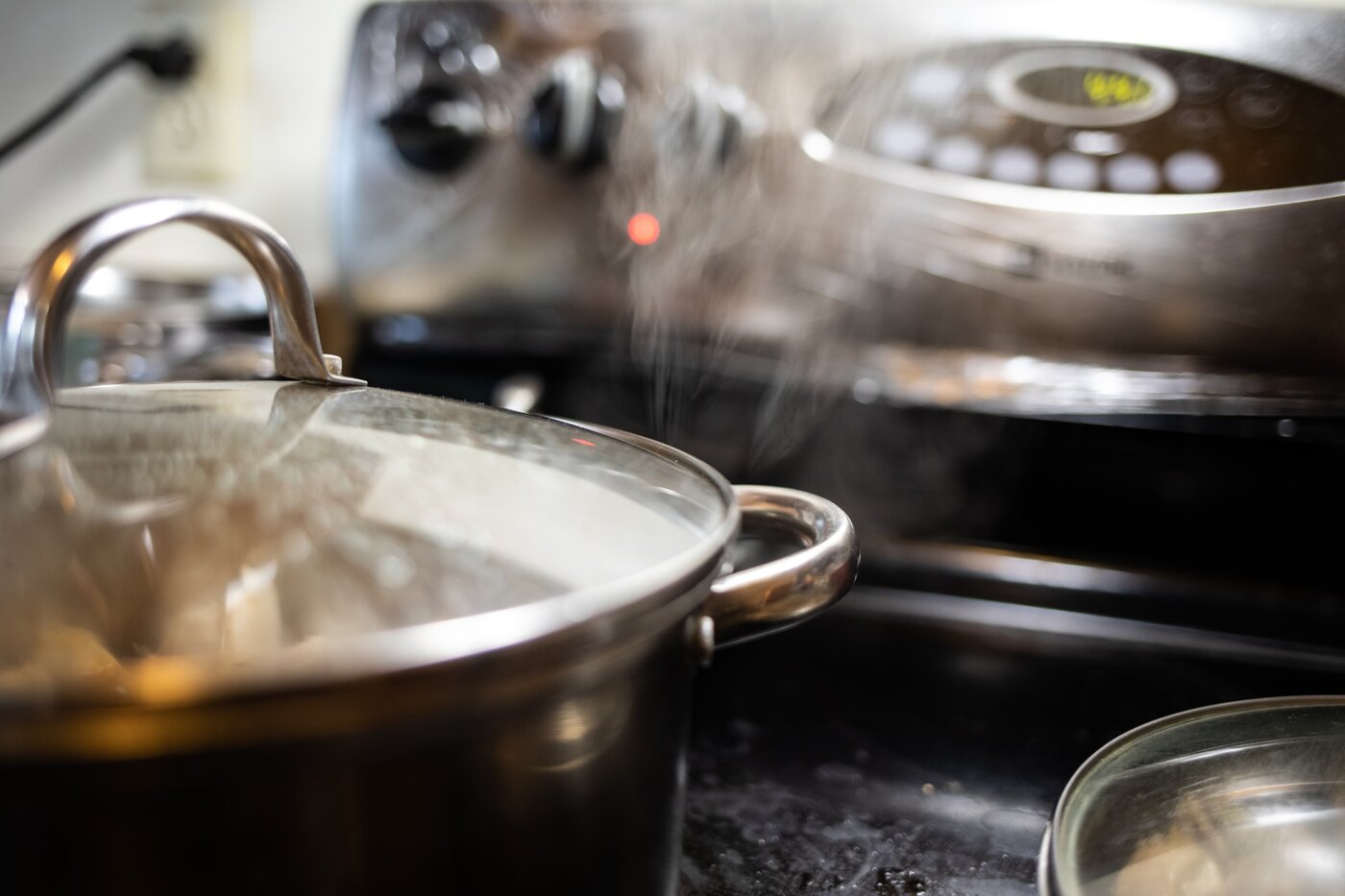
To start and maintain a simmer, simply follow these easy steps below.
Equipment
- Pot
Materials
- Liquid for simmering
Instructions
- Bring a pot of liquid to a boil over high heat.
- Reduce the flame until the bubbles slow down and the liquid is at a calm simmer.
- Check every few minutes to see if a simmer is maintained. Every stove is different, so it may be necessary to turn the heat up or down to maintain the desired simmer.
One of the biggest questions when it comes to simmering is whether or not to put a lid on the pot. The answer will depend upon the dish you are cooking.
Simmered dishes to lid: For braises, you would want to put a lid on the pot after a simmer is achieved. With the lid, all the moisture is contained, which will help to break down the toughness of the food and keep it juicier.
Keep in mind that a cover increases the temperature inside, so to ensure a simmer and not a boil while the pot is covered, the flame will need to be even lower.
Simmered dishes not to lid: If you are making a soup or stew, or anything that you want to reduce, it is best to leave the pot uncovered to allow steam to escape and the liquid to reduce. For most simmered applications, leaving it uncovered is usually the way to go.
Reduction and Concentration
When simmering, there a couple things to keep in mind about the reduction and concentration of the cooking liquid.
- One of the principal benefits of simmering is that as the liquid cooks over time some of it will evaporate, allowing the remaining liquid to reduce and the flavor to concentrate.
- This reduction leads to more intense, delicious flavors in simmered dishes, but it can also be a detriment if it is not managed carefully.
- When beginning a simmer, remember that the flavor of the liquid will become more intense as it cooks, so try not to season too heavily until the end of the cooking process.
- For example, if you season a soup with salt before simmering, it may taste perfectly seasoned. However, after simmering for an hour, the flavors will concentrate, and it will taste very salty.
Good Items to Simmer
Simmering can be usefully applied to many different foods but typically items that benefit most from simmering are tougher foods that require plenty of time in moist heat to break down, dense vegetables and legumes, and slow cooking liquids that need to reduce.
Some good items to simmer are vegetables such as beets and potatoes and legumes such as beans, as well as soups, stocks, broths and pasta sauces.
View More in:
Why Trust Us?
Meet Our Kitchen Experts
At TableMatters.com, we’re committed to providing reliable, research-backed expert cooking tips and honest cookware reviews you can trust. Our content is created by trained chefs, experienced food writers and kitchen equipment experts who test recipes, compare tools and analyze ingredients with real-world accuracy.
Whether you’re searching for reliable vegetarian meal ideas, step-by-step cooking guides or detailed product comparisons, TableMatters.com provides expert-driven, easy-to-follow content designed to help every home cook cook smarter, eat healthier and enjoy better results.