 Written by Jared Kent
 Audited by Admin
🔍 61+ Products Analyzed
★ 7k Reviews Evaluated

Vegetable stock is the flavorful liquid made from simmering vegetables and other aromatic ingredients in water. This liquid can then be used to build the base for and enhance the flavor of soups, sauces, risottos and any other dish you see fit.
Grocery store vegetable stock doesn't begin to compare in taste or nutritional value to homemade as most store-bought stocks are high in sodium and are bland and watery. Luckily, vegetable stock is easy to make, can be made in bulk and frozen, is a good way to utilize spare veggies and is a simple, yet profoundly effective way to make your home cooking more wholesome and more delicious.
How to Make Delicious Vegetable Stock
Making stock is an inexact science that you can certainly tweak to your liking. Carefully thinking through how to make your vegetable stock can drastically enhance its flavor and in turn, profoundly improve the taste of the dishes that stock will be used in. Here are the few, simple steps you should take to make incredible homemade vegetable stock:
Wash, Peel and Cut the Vegetables Small
Make sure all the vegetables are free of dirt and bitter peels. Don't stress too much over measurements, just grab a bunch of the proper veggies and get chopping. As vegetable stock doesn't cook for a very long time, you want to make sure the veggies are cut small enough that all their flavor can be extracted in time without falling apart. The size doesn't have to be exact but aim to cut all the vegetables around the size of the tip of your thumb (from the bendy part up). Keep in mind that these don't all have to be cut up whole vegetables, they can also be odds and ends.
Lightly Saut the Vegetables Before Adding Water
In a large pot, heat a tiny bit of oil over very high heat. Add the vegetables and cook on high for 3-4 minutes while stirring, just enough so that you get a little browning and start to develop some of the sugars to make the finished product more complex.
Add Water in a 1:1 Ratio
1:1 is a solid ratio to give veggie stock great flavor and body while still producing a good amount of product. Too much water will mean a bland stock. Again, this is an inexact science, so there's no need to agonize, but a good trick is to fill the pot halfway with veggies and cover it with a couple inches of water. Add the water once the veggies have been lightly sauted.
Bring the Water to a Boil Then Reduce to a Simmer
As soon as the water goes in, turn the heat up high and bring the water to a boil. Then, turn the heat down and reduce it to a simmer.
Simmer for About 1 Hour
Cook the stock for about an hour at a low to medium simmer. Boiling will turn the vegetables to mush and cooking too low will not allow for optimal flavor.
Strain and Cool
Strain the vegetables out of the liquid. Pour liquid into clean containers with the lids off and allow to cool before covering and refrigerating them. Vegetable stock will keep in the fridge for 4-5 days and in the freezer for up to 6 months.
What Vegetables to use in Stock
The three essential vegetables to use in stock are carrots, onions and celery. Quality stock vegetables should be sweet and have a relatively neutral flavor to make a generic tasting stock. Here are the best veggies and other ingredients to add to stock:
Carrots - Essential for vegetable stock. They are hearty, have great sweetness and lend a beautiful golden hue to stock. Make sure to peel before cutting.
Celery - Lends a subtle herby, grassy flavor that delicately offsets the sweetness of other vegetables. The greens, whites and hearts are all fine to use but make sure to keep out the leaves.
Onions - The foundation of any good stock. At least one-quarter of the weight of your stock vegetables should consist of onions. As they cook, their sugars develop and seep into the liquid, creating complex and savory flavors. Make sure to peel before chopping.
Mushrooms - Mushrooms have a rich umami flavor and add a wonderful meaty body to stock. Portabellas and Shiitakes work particularly well. Ensure any dirt is rinsed off first.
Leeks - Leeks help make stock clearer as they contain albumin, a compound also found in egg whites that helps to clarify liquids. Leeks are incredibly sandy, so it's crucial to soak them in clean water after cutting.
Tomatoes - Add a little chopped tomato or a spoonful of tomato paste to give the veggie stock a bit of extra sweetness.
Fennel - Fennel bulbs and stalks are terrific for stock. Remember to take off the fronds before cutting.
Parsnips - Similar in sweetness to carrots, although a little more earthy, peeled parsnips are a solid stock addition.
Garlic - Peeled garlic adds wonderful flavor to vegetable stock.
Thyme - With a wonderful floral flavor, thyme is one of the few herbs hearty enough to hold up in stock.
Bay Leaves - Add two or three dried bay leaves to stock for a sharp, herbaceous taste.
Parsley Stems - Although parsley leaves will get bitter in stock, save the stems for a light and lovely freshness.
Black Peppercorns - 7 or 8 whole black peppercorns in a pot of stock will add a delicious, but oh-so-subtle spice.
Common Mistakes to Avoid
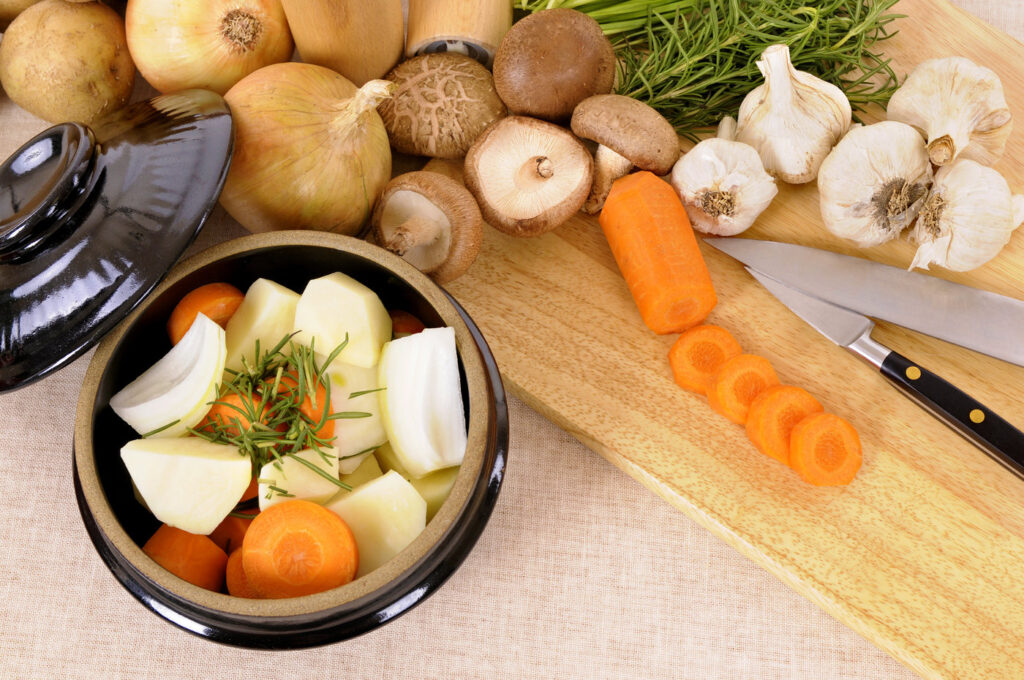
Making vegetable stock is a fairly simple and straightforward process but there are some common pitfalls to avoid.
Do Not Overcook the Stock - Vegetable stock should cook at a low to medium simmer for about an hour. After simmering for about an hour, the vegetables will have given up most of their flavor anyways and if they cook too much longer, they can turn bitter and mushy.
Do Not Salt the Stock - Vegetable stock is hardly, if ever, a finished product. When you make veggie stock it'll most likely end up in some other finished dish somehow, so salt it then. Salting a stock as its cooking or after its finished may seem like a good idea, but inevitably, it'll be cooked more and will reduce in a new dish, concentrating its flavors and becoming saltier. Thus, a tasty, perfectly seasoned vegetable stock today can turn into a salt-lick of a risotto tomorrow.
What Not to Put in Vegetable Stock
In some corners of the internet, users suggest throwing greens, beans, potatoes, tomatoes and any manner of dilapidated or forgotten veggie, herb or spice you can find into your stock. They claim that this makes the stock more flavorful, however, treating stock as a free for all to salvage all parts of any vegetable can degrade its clarity, flavor and versatility. For various reasons, certain vegetables and other ingredients simply don't belong in stock. Here are some of the things you should avoid putting in vegetable stock and why:
Anything Questionably Decaying - In culinary school, the chefs used to say of stocks: put garbage in, get garbage out. Bruised and blemished vegetables are fine for stock but anything moldy, squishy, slimy or funny-smelling should end up in the compost.
Leaves and Greens - With the exception of bay leaves, leeks and thyme, any sort of leaves do not fare well in stock as they break down and get bitter with simmering. This is especially true of soft herbs and salad greens.
Potatoes - Putting potatoes or potato peels in vegetable stock can make it starchy, cloudy and slimy.
Carrot, Parsnip and Onion Peels - All of these peels are bitter and can make the stock taste off as they cook.
Green Beans, Squash, Asparagus, Eggplants - All of these are more delicate vegetables that get bitter as they simmer.
Cruciferous Vegetables - Anything in the cabbage family. They all tend to be high in sulfur, meaning that as they simmer for a long period, they sour. Cabbage, broccoli, cauliflower, turnip, bok choy and Brussels sprouts are a few examples of vegetables to exclude.
Anything Highly Distinctive Tasting - Some people suggest using ginger, chile peppers, cloves, turmeric and a range of other highly flavorful aromatics in vegetable stock. But remember one of the keys to stock is neutrality. Chances are if you make a big batch of vegetable stock, you're not going to use all of it at once in the same dish. If you would like to use your veggie stock as a base for Hot N Sour Soup today, add your ginger and Chinese peppercorns to just enough stock for that dish so that if you want to use the stock for marinara tomorrow, you still can.
View More in:
Why Trust Us?
Meet Our Kitchen Experts
At TableMatters.com, we’re committed to providing reliable, research-backed expert cooking tips and honest cookware reviews you can trust. Our content is created by trained chefs, experienced food writers and kitchen equipment experts who test recipes, compare tools and analyze ingredients with real-world accuracy.
Whether you’re searching for reliable vegetarian meal ideas, step-by-step cooking guides or detailed product comparisons, TableMatters.com provides expert-driven, easy-to-follow content designed to help every home cook cook smarter, eat healthier and enjoy better results.