 Written by Jared Kent
 Audited by Admin
🔍 103+ Products Analyzed
★ 28k Reviews Evaluated

At the best restaurants around the world, the food is not only mind-blowingly delicious, but its also exceedingly beautiful as if the chef is a master painter using the plate as a canvas to create their masterpiece. To make this kind of gorgeous food, it takes an incredible amount of creativity and ingenuity, artistic flair and years of experience honing one craft.
However, if one examines some of the most stunning plates of food on earth, its apparent that there are common patterns and methods that great chefs use to make their food look so good. By employing these methods, you can start to make your own food look more exquisite. Your plates may not look like a three Michelin star masterpiece right away, but they can certainly be given some extra artistic dazzle.
Below, some of these practices are explained so that you can channel your inner food artist and begin making your own beautiful food.
Use Different and Creative Plates
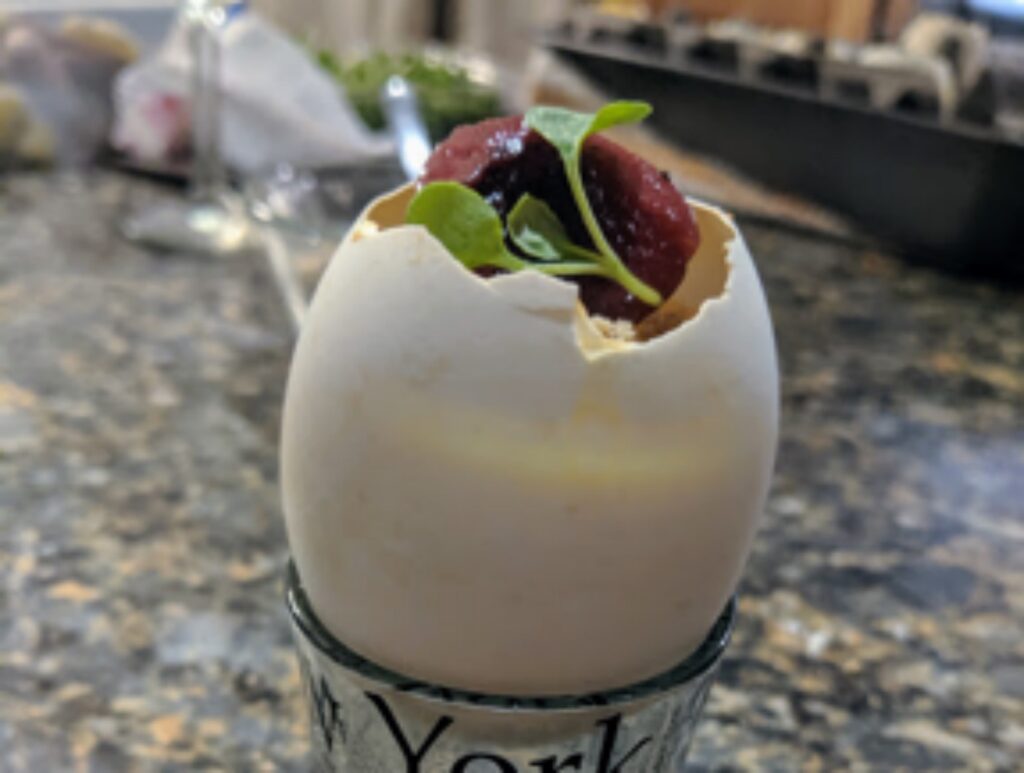
The first step in plating an amazing dish is selecting what you are going to plate it on. The plate is the blank canvas upon which you present all of your hard work. Think outside the box, not everything has to be served on a traditional white circular plate. You don't need an exorbitant budget or a ton of fancy china to plate creative, elegant and sophisticated looking food.
Serving roasted vegetables or a cheese and crackers spread on a wooden cutting board gives the dish a warm and rustic elegance. Try serving smaller appetizers inside of a martini glass for a chicer, sexier look. Put a cream soup in an espresso cup for a dainty yet refined-looking hors doeuvre. Consider the colour and shape of the serving dish, a black plate offers an appealing colour contrast to reds and oranges while a rectangular plate can give food a free-flowing, whimsical appearance.
Another option is to ditch the plate altogether and get creative. Thai pineapple fried rice is traditionally served inside of a hollowed-out pineapple, shredded cheese and nuts can be toasted, pressed over a small bowl and molded to form a bowl that creates a fun and interesting vessel for a light salad. As is pictured above, serving a custard such as Flan or inside of an eggshell is a creative serving method that is sure to wow your guests.
Use Bold, Bright, Attractive Colours
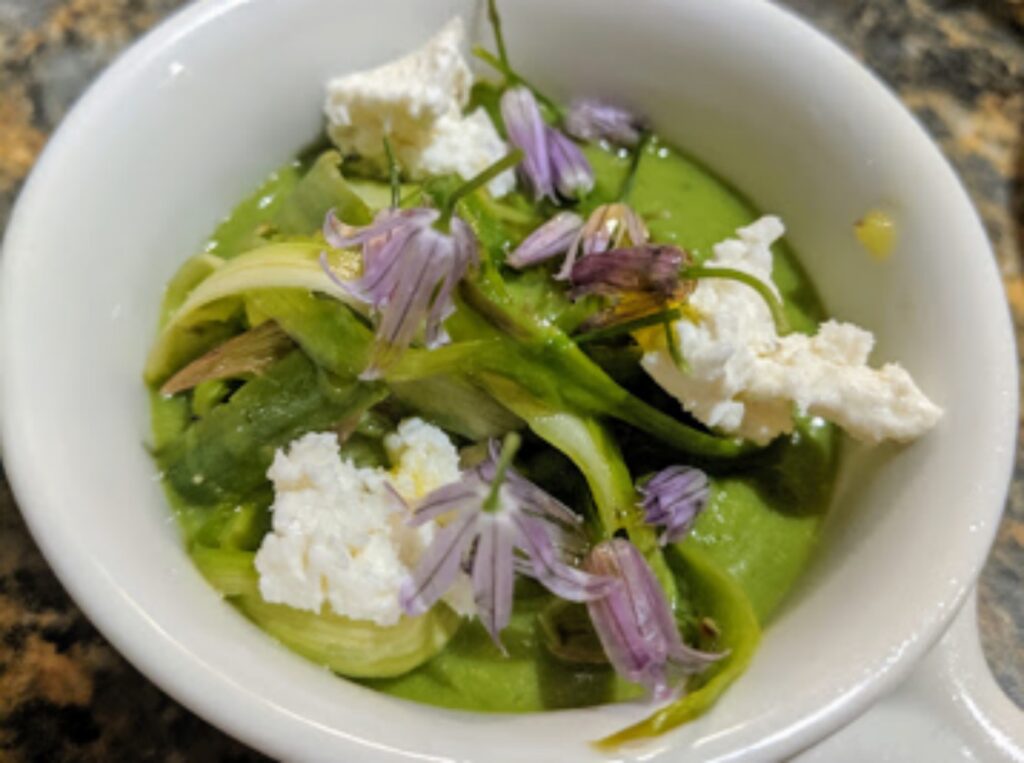
For great chefs, the ingredients that they use are like a palette of paint, each one representing a different colour that will bring something unique to the finished product. When you look at a plate of food, the thing your eyes are immediately drawn to is the colours. An old chef adage is: you eat with your eyes first and the best way to make your food pop and entice others to eat it is to incorporate vibrant colours.
Think about contrast, you never want a dish to be all one colour, especially brown dishes. Serve darker grilled foods like charred cauliflower with bright green condiments like chimichurri to liven them up. Cut dishes with green bases with reds or purples to add playful variety. Use purees to add colour, a bright orange puree of carrots and ginger perfectly contrasts the golden brown sear of a pan-fried dumpling.
Add little garnishes that give quick pops of colour. Picked green herbs, slices of red chili, pieces of pickled vegetables and chunks of crumbled white cheese all can lend lively colour variations. The photo above of asparagus soup is a great example of a bright, vivid green being contrasted superbly with purple chive blossoms and white goat cheese.
Utilize Plating Tools to your Advantage
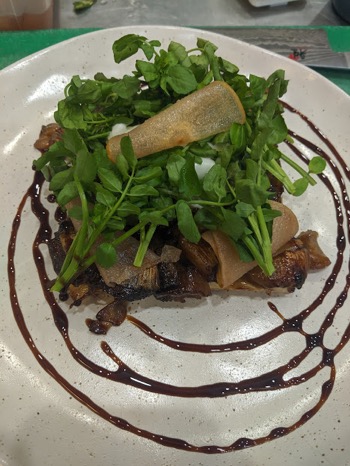
Just like artists, chefs have a wide range of tools available to them to create picturesque pieces of work. Learning to use these tools properly can help you elevate the way you present your food. Using a squeeze bottle is one of the best ways to make your plates look interesting. Put sauces, purees and dressings inside of a squeeze bottle to create zig-zag lines, dots, circles or any shape you can imagine.
When it comes to sauces and purees, manipulate them to look more appealing on the plate. Taking a spoon and pushing a puree into a swoosh shape can generate a fun visual element while using a grill brush to literally paint a sauce onto a plate is commonly used fine-dining trick. Here, a squeeze bottle is used to create circular patterns to border the main dish.
Contrast Sizes and Shapes
Contrast is one of the keys to making food look wonderful, which definitely applies to the size and shape of the food. As with colours, nothing should be one-note and variety is important. Next time you go to a fancy restaurant, notice how many different components might be on one plate. While all of these elements should serve a useful purpose in the taste of the dish, part of the reason they're there is so that your eyes have several different little things to notice when you first look at your meal.
When using vegetables, try experimenting with different shapes and sizes. Some vegetables, like potatoes or turnips work well when cut into cubes. Others, like radishes or onions, look good as circles while cabbage and green onions can be shredded and mounded to add height to a dish. Sometimes leaving ingredients in their natural shapes, such as a tip of asparagus or small cauliflower floret, makes for fascinating visual dynamics on the plate.
In fine dining, you may find whole mushrooms in a dish as their natural shape adds a fascinating element. Herbs like cilantro and parsley could be chopped up and scattered around the dish or sometimes whole leaves can be strategically placed around the dish.
In this simple yet stunning bowl of hot-sour soup notice how the long, cylindrical mushrooms play off the shorter, sharper green onions and the small, ovular toasted sesame seeds. A drizzle of sesame oil adds irregular droplets across the surface of the soup. This dish is a great example of ingredients coming together to create multiple contrasting shapes and sizes that add attention-grabbing visual appeal.
Be Asymmetrical
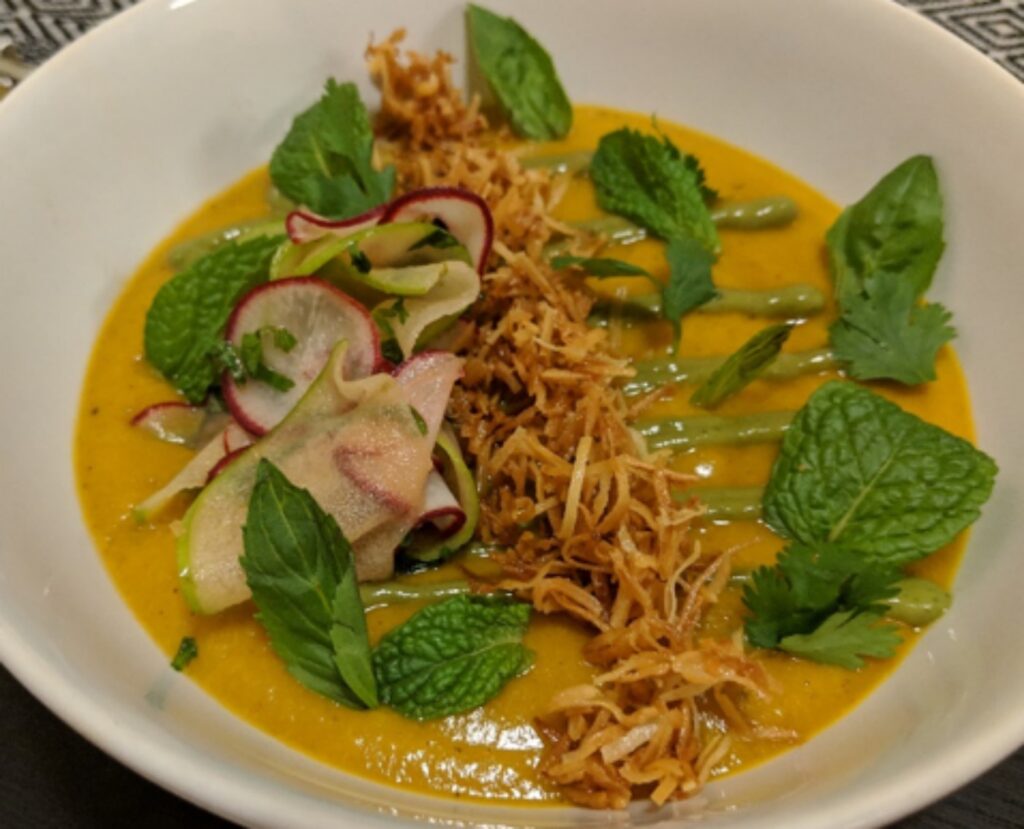
As counterintuitive as it may sound, symmetry is usually deliberately avoided when plating extravagant, high-end food. The issue with trying to plate things symmetrically is that you are human and it is near impossible to make one side of a plate look exactly like the other.
So, if you have a piece of fish that you're garnishing with six slices of radish and you try to put three on each side of the fish, chances are you will not put them all in the exact same place on either side. Somebody may look at that dish and subconsciously notice that lack of symmetry and feel that something is off.
Instead, always plate with odd numbers, use seven slices of radish and spread them randomly across the plate. When you garnish, put your garnishes on one side or the other of the dish, creating contrast instead of sameness on each side.
In the photo of curried sweet potato soup, the sporadic placement of herbs and laying the apple-radish salad on one side of the bowl creates an appealing contrast. If you like sweet potatoes, another excellent dish you may want to try is our Sweet Potato Casserole with Cayenne and Pecan Crust.
View More in:
Why Trust Us?
Meet Our Kitchen Experts
At TableMatters.com, we’re committed to providing reliable, research-backed expert cooking tips and honest cookware reviews you can trust. Our content is created by trained chefs, experienced food writers and kitchen equipment experts who test recipes, compare tools and analyze ingredients with real-world accuracy.
Whether you’re searching for reliable vegetarian meal ideas, step-by-step cooking guides or detailed product comparisons, TableMatters.com provides expert-driven, easy-to-follow content designed to help every home cook cook smarter, eat healthier and enjoy better results.