 Written by Jared Kent
 Audited by Admin
🔍 56+ Products Analyzed
★ 24k Reviews Evaluated
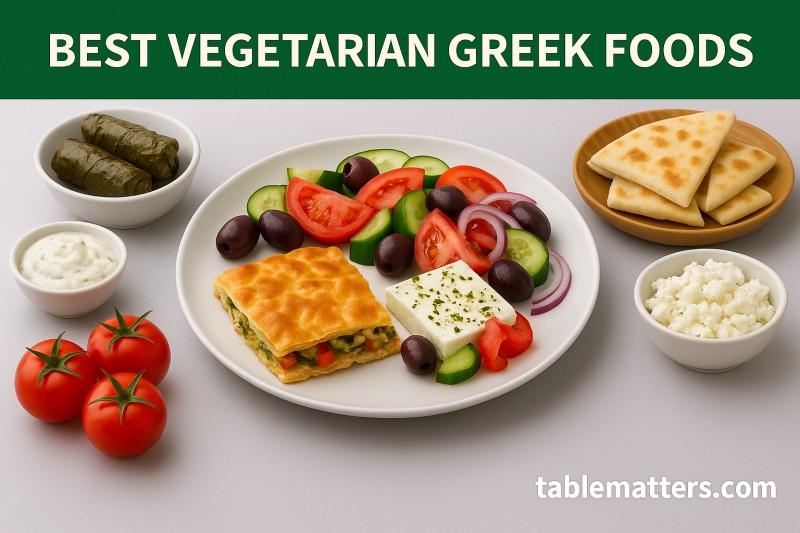
Greece has some of the most delicious and nourishing food of any country on Earth. Greek food is marvelously simple, yet bold, assertive and exciting. For meat-free eaters, there is a bounty of wholesome vegetarian Greek foods that are just as beautiful as they are satisfying. Greek food is defined by gorgeous vegetables, briny olives, creamy cheeses, bright citrus, fresh herbs, and magnificent desserts.
As with any food culture, Greek cuisine has many different variations and specialties as you move about the regions of the country. But these dishes are some beloved hits that you could find across menus in most Greek restaurants. If you find yourself with the itch to indulge in some delicious meat-free Greek food, these dishes are a great place to start.
Briam
If you love fresh vegetables, then you're sure to love Briam. A mix of fresh vegetables roasted with herbs and olive oil into a sort of stew, Briam is the perfect example of the beautiful simplicity of Greek cuisine.
Typically, the vegetables in Briam are eggplant, zucchini, tomatoes, onions, olives, and potatoes. But depending on availability, the blend can certainly be adjusted. Think of Briam almost like a Greek riff on ratatouille.
Simply slice the vegetables, toss them in garlic and oregano and roast them until they melt down into a soft, juicy stew packed with great flavor. Serve this delicious, rustic vegetable dish with briny feta cheese and a loaf of crusty bread to soak up the juices.
Tzatziki Sauce
Legend says that it goes all the way back to ancient Greece, but the Turks, Arabs, Armenians, Bulgarians and others who were part of the Ottoman empire all lay claim to the famous dessert.
Tzatziki sauce is an age-old Greek condiment with a wide range of tasty applications. It's made by mixing strained yogurt with shredded cucumber, lemon, garlic, parsley and chopped dill. The cucumber, lemon and fresh herbs make it delightfully bright and refreshing while the yogurt gives it a rich, creamy texture.
Serve Tzatziki as a dip with toasted pita or fresh veggies or top fries with tzatziki and feta to make an addicting appetizer. Use it as a salad dressing, substitute it for mayo in veggie burgers, sandwiches or wraps. Try spooning tzatziki sauce over grilled eggplant or cauliflower to wonderfully contrast the charred flavor. There is no shortage of great uses for this iconic Greek sauce.
Dolmades
A dish that is said to have roots back to the ancient Greeks, Dolmades are a quintessential Mediterranean appetizer.
Dolmades are stuffed grape leaves, typically filled with a rice and onion mix seasoned with lemon, garlic, and fresh herbs like dill and parsley. In order to be stuffed, the leaves need to boiled then dropped into a salty solution, giving them a briny flavor that perfectly complements the lemony, herby filling.
Depending on the region of Greece, the fillings may vary slightly and you can also find variations of Dolmades in Turkish, Iranian and other middle eastern cuisines. At any Greek restaurant, you should be able to find a tasty rendition of dolmades.
Usually served chilled, the flavorful stuffing rolled tightly inside the briny leaves makes these nuggets a refreshing, delectable snack to add to any Greek feast.
Baklava
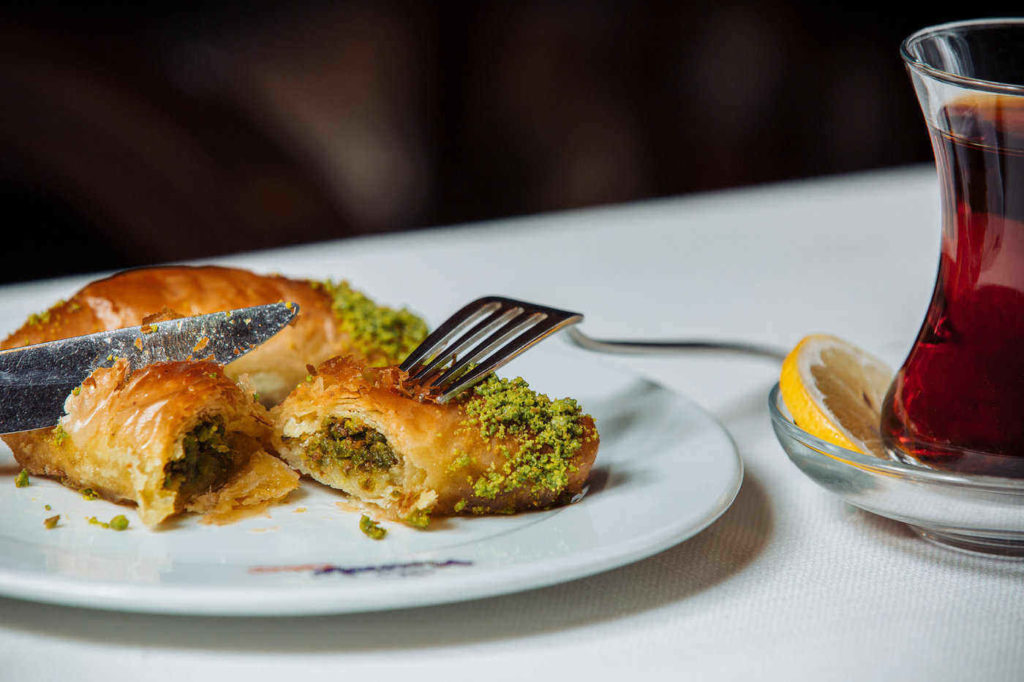
Perhaps the most popular and well-known Greek dessert in the world, baklava is a true pleasure. Baklava does have a somewhat murky and controversial history. Legend says that it goes all the way back to ancient Greece, but the Turks, Arabs, Armenians, Bulgarians and others who were part of the Ottoman empire all lay claim to the famous dessert.
Wherever it came from, baklava is truly heavenly. It's made with layers of flaky, buttery phyllo dough filled with chopped nuts (pecans or walnuts), baked to crispy goodness and topped with a sweet honey-lemon syrup. Top baklava with a dollop of whipped cream for a wonderful Greek treat.
Spanakopita
Sometimes known as Greek spinach pie, spanakopita is a classic Greek snack. To make spanakopita, sauted spinach, butter and feta are mixed together then wrapped in flaky phyllo dough. The phyllo dough is then brushed with beaten egg and baked to golden brown perfection.
Spanakopita vary in size, but they're usually small enough to hold in one hand and be eaten as a hand pie. The buttery phyllo, feta and spinach make for a savory, slightly salty pie that makes an excellent mid-day snack. Grab a couple spanakopita for a lunchtime nosh or eat them as an appetizer. A tart, herbaceous white wine like a Sauvignon Blanc pairs excellently with spanakopita.
Lemoni Patatas (Lemon Potatoes)
Greek roasted lemon potatoes are the side dish you didnt know you needed. They've got the rich, complex flavor of caramelized roasted potatoes but the lemon also makes them taste vibrant and fresh.
For this dish, Yukon Golds or another waxy potato are diced large and marinated in lemon juice, olive oil, crushed garlic and oregano for a couple of hours. They're then slow-roasted until they're soft and tender before being put under the broiler to caramelize the outsides.
The marinade is cooked with the potatoes, forming a richly flavorful sauce to spoon over the potatoes at the end. Look for these potatoes at your favorite Greek restaurant.
Choriatiki
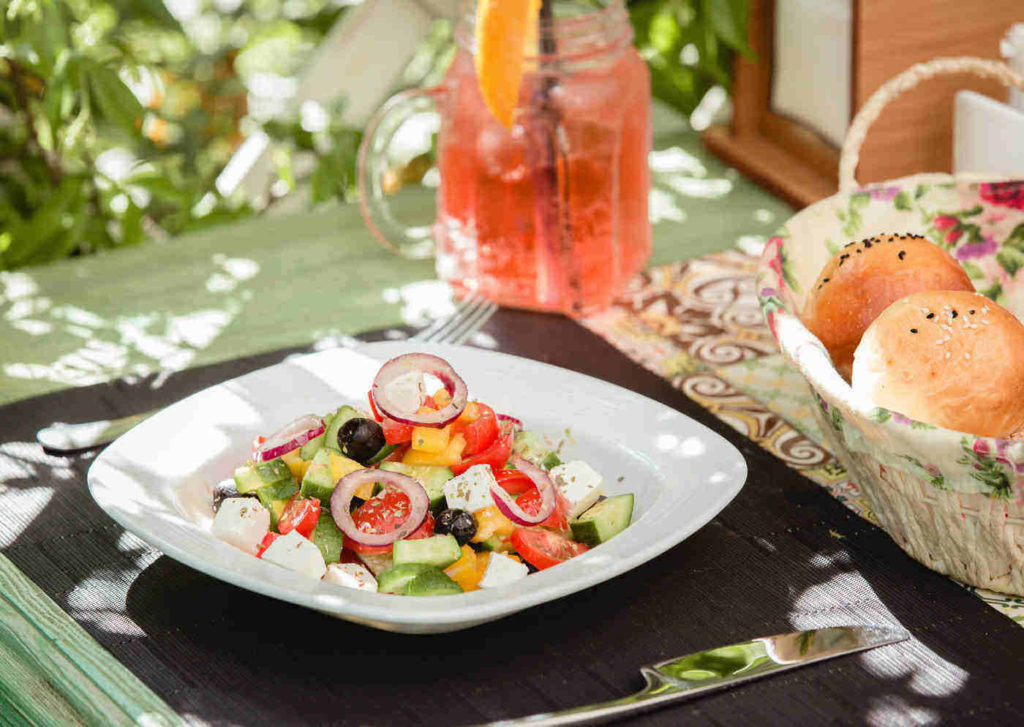
Choriatiki, better known as Greek salad, is a must for any Greek feast and is ubiquitous in Greek restaurants and households alike. A simple salad consisting of cucumbers, tomatoes, red onion, feta and olives choriatiki is beautiful in its simplicity.
The dressing is typically a mix of olive oil, red wine vinegar and Greek oregano. This salad is light, clean and fresh tasting with a pleasant crunchy texture, it serves as the perfect starter or side dish to any heavier Greek dishes.
Saganaki
Saganaki, or Greek fried cheese, is a must for any cheese lover. Saganaki is commonly made from Halloumi, sheeps milk feta or another semi-soft white cheese.
The name saganaki actually comes from the small skillet that the cheese is cooked in, which is called a saganaki. To prepare this dish, a block of cheese is dusted in flour then seared at high heat in a small skillet, creating a crispy, golden-brown exterior and a bubbly, molten interior.
Order Saganaki in a Greek restaurant and you'll be treated to a show. As your server sets the cheese down on your table, they'll pour some brandy into the pan and flamb it the flames gorgeously engulfing the cheese and perfectly toasting the outside. Squeeze some fresh lemon over the saganaki and use some toasted pita to mop up all the melted, gooey deliciousness.
View More in:
Why Trust Us?
Meet Our Kitchen Experts
At TableMatters.com, we’re committed to providing reliable, research-backed expert cooking tips and honest cookware reviews you can trust. Our content is created by trained chefs, experienced food writers and kitchen equipment experts who test recipes, compare tools and analyze ingredients with real-world accuracy.
Whether you’re searching for reliable vegetarian meal ideas, step-by-step cooking guides or detailed product comparisons, TableMatters.com provides expert-driven, easy-to-follow content designed to help every home cook cook smarter, eat healthier and enjoy better results.