 Written by Jared Kent
 Audited by Admin
🔍 67+ Products Analyzed
★ 20k Reviews Evaluated
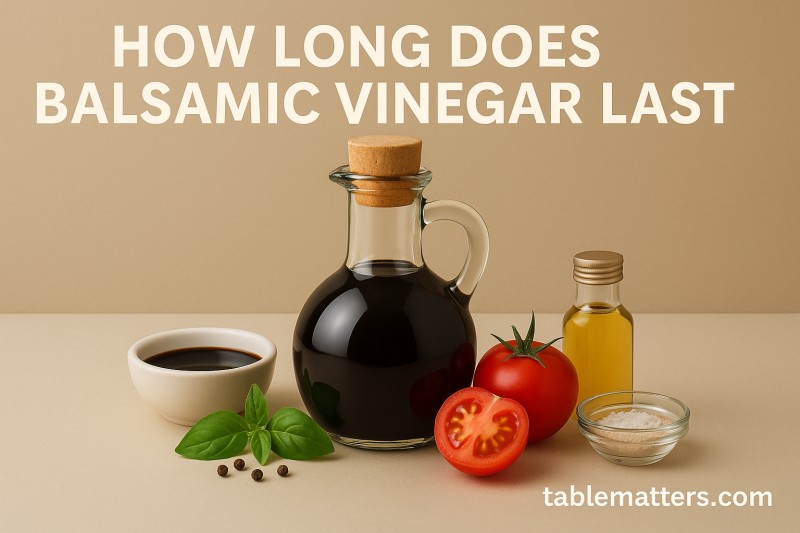
Anyone who cooks frequently is likely to come across an old bottle of balsamic vinegar hiding in the dark recesses of your pantry. You're not quite sure how long it's been there, and you're wondering if it's safe to cook with.
You start asking questions like, how long does balsamic vinegar last before it goes bad? Does balsamic vinegar even go bad in the first place? Certainly, you don't want to dump good, delicious balsamic down the drain. But you don't want to serve rancid vinegar either.
Because balsamic vinegar has such an intense flavor, you tend to only use a small amount at once, so you can end up hanging onto one bottle for a long time. So, what do you do? Here's everything you need to know about the shelf life of balsamic vinegar, proper storage of balsamic vinegar, and all of the other delightful quirks of this amazing Italian ingredient.
Does Balsamic Vinegar Go Bad?
The good news is that technically speaking, balsamic vinegar does not go bad. Balsamic will never spoil and become unsafe to eat. Balsamic, like any other type of vinegar, is high in acetic acid, which kills off harmful levels of bacteria.
When you buy a new bottle of balsamic vinegar, you'll see an expiration date, but that only pertains to the quality of the vinegar, not the safety.
The bad news is that for commercially produced bottles of balsamic vinegar, the taste and aroma will begin to deteriorate over time. Most bottles of balsamic that you'll find at the grocery store will be at their peak quality for three to five years.
What is the Shelf Life of Balsamic Vinegar?
As I mentioned above, balsamic vinegar doesn't spoil, so it technically has an indefinite shelf life. However, you'll want to use open bottles within two to three years and unopened bottles within five years. After that, you may find the color beginning to change, and the taste will not be as bright and fresh as it once was.
The shelf life also partially depends on the quality of the vinegar. Cheap balsamic vinegar bottles that you buy in the grocery store will begin to degrade much quicker than high-end bottles you buy in specialty markets.
If you're unsure of how old a bottle of balsamic is, look at the expiry date and try to use it within a couple years of that date. Of course, if you're unsure of the quality of the vinegar, you can always give it a quick try since there are no health risks involved from tasting old vinegar.
If the flavor isn't great, you may want to get a new bottle before making a balsamic vinaigrette dressing or balsamic glaze with it.
Proper Storage of Balsamic Vinegar
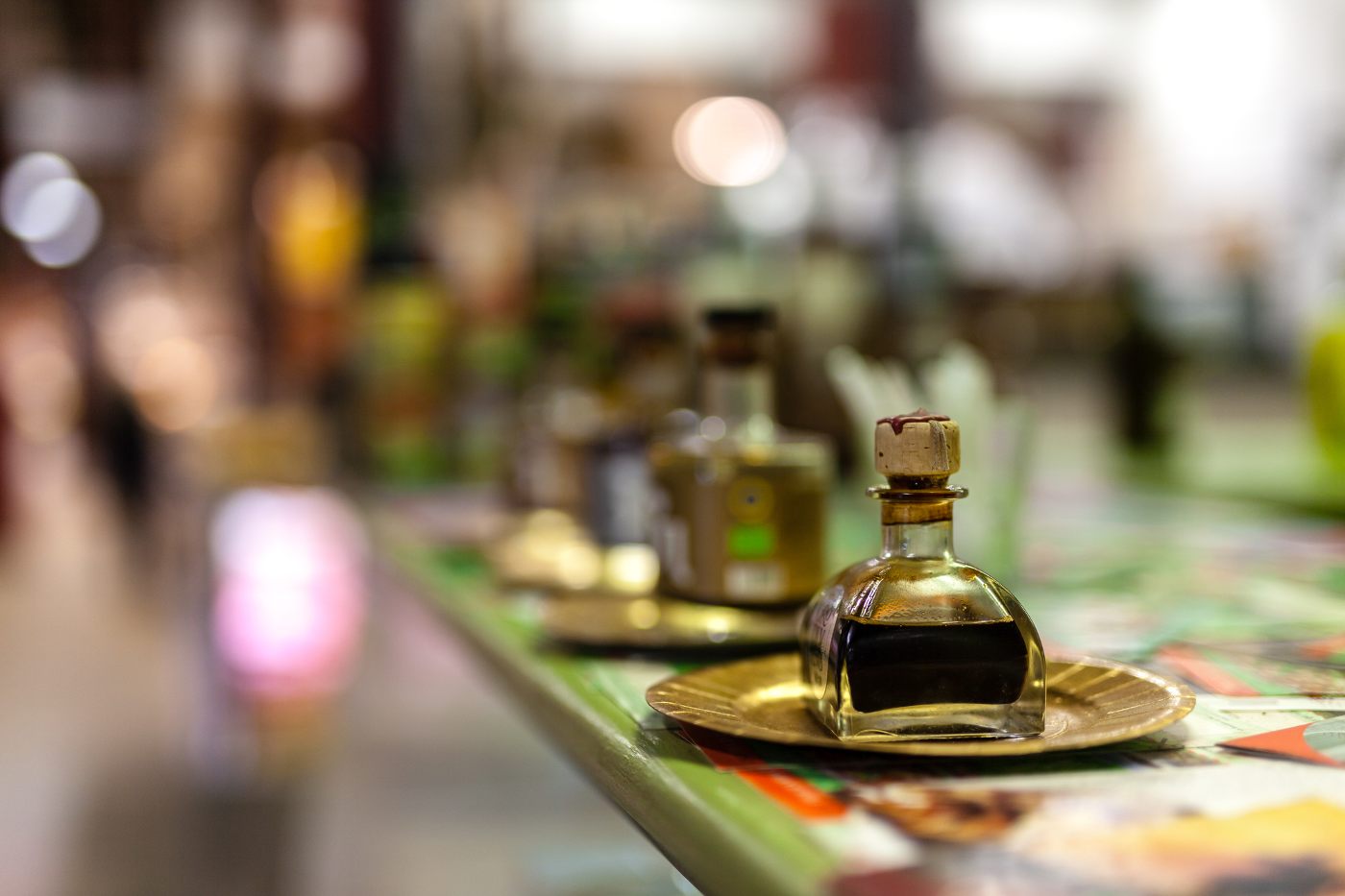
Just like olive oil, balsamic vinegar is sensitive to light and heat. The best way to keep balsamic vinegar at peak quality is to store it in a cool, dark place away from heat and direct sunlight. A dry place, like a A lot of people tend to keep their balsamic vinegar in a cabinet right next to or above the stove where it can be exposed to damaging high temperatures. If this is where your balsamic vinegar lives, it would be a good idea to move it to a cooler location to keep it tasting fresh for a long time.
Also, make sure that the bottle cap is screwed on tightly every time you're done using it. There's no need to refrigerate balsamic vinegar.
Blobs of Sediment in Your Balsamic Vinegar?
Sometimes you will see little blobs of goop or other slimy bits of sediment in your bottle of balsamic vinegar. Usually, this sediment looks like thin little wisps at the top of the vinegar and a blob that looks like a hunk of raw liver sitting at the bottom of the bottle.
These blobs and wisps, though they may look a little alarming, are perfectly natural and safe. Sometimes known as the mother of vinegar or vinegar mother, these masses and bits of stringy sediment are actually just pieces of cellulose which are formed by healthy bacteria during fermentation.
Balsamic vinegar is made from grape juice. In the process, spongy masses of harmless bacteria break down the sugar from the grapes and ferment them into a vinegar that's high in acetic acid.
Without that acid, it wouldn't be vinegar it would just be grape juice. Those slimy bits you see in the bottle are simply a byproduct of that fermentation process. Usually, all the slimy bits are filtered out of vinegar before bottling, but it's not uncommon to find some.
The same phenomenon occurs in red wine vinegar, apple cider vinegar, white vinegar and any other kind of vinegar. If you see a mother vinegar in your bottle, you can keep using it as normal.
But since those little blobs of goop can be a little slimy, you can also strain them out with a colander and coffee filter to have a smoother vinegar. If you're really feeling adventurous, you can save the vinegar mother to make your own vinegar.
Types of Balsamic Vinegar
Although balsamic is technically a vinegar, it's more like a wine in the way it's treated in the food world. Like wine, balsamic vinegar has vastly different levels of quality and price, ranging from a couple of bucks in the grocery store for a cheap, mass-produced bottle to hundreds of dollars for a fine, well-aged masterpiece balsamic.
Also, similarly to wine, different producers of balsamic create vinegars whose unique characteristics stem from differences in geography, base product and production methods.
There are three main types, or grades, of balsamic vinegar: commercial, condiment and traditional balsamic vinegar. You can usually find out which is which by reading the labels.
Traditional Balsamic Vinegar
Traditional balsamic vinegar is the royalty of the vinegar-producing world. The European Union governs what can or cannot be labeled as traditional balsamic vinegar.
Like fine wine labeling specifications, there are strict requirements for being labeled as traditional. The traditional labels are ceto Balsamico Tradizionale di Reggio Emilia" or "Aceto Balsamico Tradizionale di Modena.
In order to achieve these labels, the balsamic must be made in either the Reggio Emilia or Modena regions of Italy. The vinegar also has to be made from only the juice and skins of Trebbiano or Lambrusco grapes.
The grape juice ferments and ages in wooden barrels for up to 18 years, picking up the characteristics of the barrel. As the balsamic sits in the wooden casks, moisture evaporates and the vinegar thickens. The result is that traditional balsamic vinegar is thick and syrupy with a dark color and glossy sheen.
A traditional balsamic vinegar has an incredibly complex, intense flavor and is a true culinary treat. However, it is also the most expensive balsamic, with some bottles of vinegar commanding several hundred-dollar price tags.
Enjoy traditional balsamic on its own, with ice cream, or with fine cheeses. For the best quality, do not expose traditional balsamic vinegar to heat.
Condiment Balsamic Vinegar
Of the three grades of balsamic, condiment grade, or regular balsamic vinegar, is in the middle. It doesn't necessarily satisfy all the strict requirements for traditional balsamic vinegar, but it has many of the same qualities at a lower price tag.
Condiment grade balsamic is darker, thicker, and richer. It's good for dressings, mixing with olive oil to dip bread in or drizzling on top of cheese, crackers or ice cream. Some common labels for condiment grade balsamic are Balsamic Vinegar of Modena PGI or Condimento Balsamico.
Commercial Balsamic Vinegar
Commercial balsamic is the cheapest, most widely available balsamic vinegar. Sometimes it's also known as generic balsamic vinegar. This is the balsamic that's likely available for a few bucks in your local grocery store. It's quickly mass-produced and is not always made from pure grape juice, as there may be caramel coloring, sweeteners, or other flavors and thickeners added.
Often times, you will see the term Balsamic Vinegar of Modena on these bottles, but only if they're produced in the Modena region of Italy. Without that label, the vinegar might not even be from Italy.
In terms of quality, commercial balsamic is lighter, thinner, and less intense in flavor than traditional and condiment grades. Although far from the highest quality, it provides good value for your dollar and is more than suitable for dressings and marinades or for making balsamic glaze.
FAQ
After opening, balsamic vinegar will be at its peak quality for three to five years. Beyond that, the quality of the vinegar may start to degrade, but it will be safe to consume indefinitely.
How long does unopened balsamic vinegar last?
Unopened balsamic vinegar will last for a very, very long time. In some Italian families, aged bottles of balsamic vinegar are passed down from generation to generation, so it can literally last a lifetime. But again, for most bottles, it's best to consume the bottle within 5 years to ensure the best quality.
How long does balsamic vinaigrette last?
Bottled balsamic vinaigrette will last for 6 to 9 months under refrigeration. Homemade balsamic vinaigrette lasts 3 to 4 months if stored under refrigeration in an airtight container. Depending on what you put in your balsamic vinaigrette, it may last for more or less time. For example, fresh herbs and garlic could shorten the shelf life of balsamic vinaigrette. As long as the dressing doesn't smell rancid and the container doesn't have any mold, it will be safe to use. To ensure the best quality over time, try and make just enough balsamic vinaigrette to last for 1 to 2 weeks at a time.
Does Balsamic Glaze go Bad?
Just like balsamic vinegar, balsamic glaze does not go bad. That's because balsamic glaze, or balsamic reduction, is just balsamic vinegar that has been cooked down. It has the same high acid content as balsamic vinegar. There's no need to refrigerate balsamic glaze unless you've added flavorings like garlic or fresh herbs to it.
View More in:
Why Trust Us?
Meet Our Kitchen Experts
At TableMatters.com, we’re committed to providing reliable, research-backed expert cooking tips and honest cookware reviews you can trust. Our content is created by trained chefs, experienced food writers and kitchen equipment experts who test recipes, compare tools and analyze ingredients with real-world accuracy.
Whether you’re searching for reliable vegetarian meal ideas, step-by-step cooking guides or detailed product comparisons, TableMatters.com provides expert-driven, easy-to-follow content designed to help every home cook cook smarter, eat healthier and enjoy better results.