 Written by Jared Kent
 Audited by Admin
🔍 102+ Products Analyzed
★ 28k Reviews Evaluated
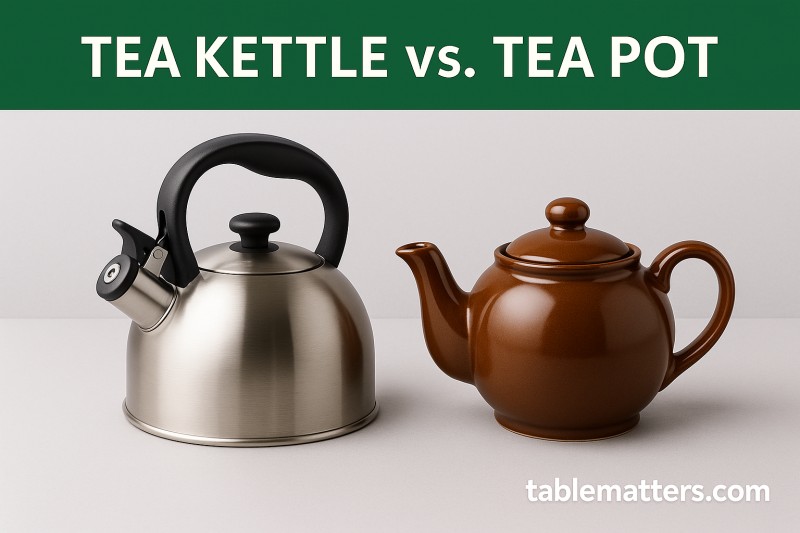
A common confusion among tea drinkers is the difference between a tea kettle vs. a tea pot. While they seem similar, they are two different tools, both of which are used for making great tea. So, what is the difference?
In short, a tea kettle is for heating water while a tea pot is for steeping the leaves and pouring the tea. If youre not well-steeped (well-steeped, get it?!) in tea drinking culture, it can be easy to get confused between a tea kettle and a tea pot.
The tea kettle, which may be electric or heated on the stove, is the vessel you pour water into to bring up to a boil. Once your water is hot, youll then pour that water into a teapot where it can sit with the leaves to steep for a few minutes.
Typically, you pour the tea into glasses right from the teapot. As with all cooking tools, there are different kinds of tea kettles and teapots, each of which offer a slightly different experience. Read on to learn more about tea pots and tea kettles!
Drinking Tea From a Teapot vs. a Tea Kettle
Technically speaking, neither a teapot nor a tea kettle is strictly required to make tea. Also, you dont actually drink tea directly out of either of them. You still drink tea out of tea glasses or mugs. Both tea kettles and tea pots make the tea making process faster, easier, and tastier, however.
The tea kettle quickly and conveniently heats the water, while the teapot boosts the flavor of the tea and adds to the aesthetic.
If you dont have a teapot, you can use your kettle to heat water up to a boil, then steep the teabags in the mug you plan on drinking from. If you dont have a tea kettle, you can heat up water in a pot on the stove to pour into your teapot and steep your tea.
If you dont have either, you can microwave a teabag in a mug with water to make a cup of tea, but the flavor will not be as rich as if you made it in a teapot.
What Is a Teapot?
A teapot is large, rounded vessel with a fitted lid and a spout thats used to steep and pour tea. Teapots are meant for holding tea and hot water, then pouring into cups.
Teapots are usually ceramic but can be made from other materials like porcelain or glass. They are NOT meant to go on the stove or other direct heat.
Teapots are not designed to be able to withstand high heats, especially from direct fire. Putting a ceramic teapot directly on the stove could cause it to crack, or even explode!
Most teapots have some kind of filter built in, so that you can fill them with loose tea leaves and pour directly into cups without bits of leaves in your tea. Of course, if you make tea with tea bags instead of loose tea, that filter is not as necessary.
While a teapot is not necessary to make tea, it certainly enhances the tea drinking experience and heightens the flavor of the tea.
The space inside the teapot and the closed lid allows the steam to waft up and swirl around the inside of the pot, which draws more flavor out of the tea leaves.
Using a teapot also makes it easier to make several cups of tea at a time. If youre serving tea to company, a teapot provides an easy yet elegant way to quickly steep and pour cups of tea to a few people at once.
Another great option is to use your teapot to make a pot of cold-brewed iced tea. Instead of filling a teapot with hot water, you could pour cold water over tea leaves or tea bags and let them steep for several hours in the fridge before pouring into cups. This will result in a tea that is smoother and more delicate in taste.
Different Kinds of Teapots
As is mentioned above, tea pots can be made from different materials, including ceramic, porcelain and glass.
Ceramic and porcelain teapots tend to hold heat a little better, keeping the tea warmer for longer, but they can be a little more on the expensive side. A glass teapot is usually cheaper, but might not hold the tea hot for quite as long.
There are also many different sizes of teapots available, ranging from small pots meant to make individual cups of tea to larger pots that can hold up to 8 cups at once.
Many teapots are ornamental as well as functional. Artistic teapots come with all sorts of different designs, paintings or drawings on them. You can also find teapots in an array of different colors.
If youre an artist yourself, you may even want to buy a plain teapot and decorate it with your own designs. Whatever your preference, you can always find a teapot that fits your personal taste or kitchen aesthetic so that youre always pouring tea in style.
With styled teapots, its common to find them in a set with matching teacups. A personalized teapot or tea set can also be a great gift for a tea-loving friend or family member. Some teapots are even passed down through generations and become family heirlooms!
What Is a Tea Kettle?
A tea kettle is a pitcher-shaped tool that brings water to a boil for the purposes of making tea. In the tea making process, its only job is to heat up the water and then pour that water into the teapots.
Most tea kettles are stainless steel, since it stands up to direct heat well. There are other types of tea kettles made from heat-treated ceramics or glass, however.
Tea kettles are not meant for steeping the tea inside of them. Since tea kettles have no filters, trying to steep and pour tea through them would be a challenge. Tea kettles also lack the rounded shape of teapots. which help to extract maximum flavor from the tea leaves.
Types of Tea Kettles
The two main types of tea kettles are electric and classic. Today many tea kettles are electric, and in them, the water is heated by an electric base that sits underneath the kettle. The stand of the kettle may need to be plugged into the wall or it might be battery powered.
A classic tea kettle heats up the water directly on the stove. Classic tea kettles have a thin opening in the lid that allows the steam from the boiling water to escape, making a whistling sound that lets you know your water is ready.
Back in the day, all tea kettles were classic, but the electric one is much more common in households today.
Electric Tea Kettles
Electric tea kettles are very popular today, and for good reason. Some models of electric countertop tea kettles can bring water up to a boil in as little as 90 seconds.
Other models make take 3 or 4 minutes to bring water up to a boil but they still usually work faster than a classic kettle that heats on the stove.
Many tea kettles will still make the whistling sound to let you know the water is ready. and some of the high-end models even have thermometers in them.
If youre a real tea nerd, you might prefer certain teas at certain temperatures, so having a kettle with a thermometer built in would be a good choice for you.
Electric tea kettles are also a great choice if you have coil burners on the stove in your home or apartment.
When using a classic tea kettle, coil burners take much longer to heat up than a gas stove, so an electric kettle will make the whole process much quicker.
You can also use an electric tea kettle for other things besides tea. Since the kettle boils water so quickly, its great for starting water to cook pasta, rice, vegetables or anything else you would boil. You can bring the water up to a boil in your kettle, then pour it into a pot on the stove and start cooking much quicker than you would by just heating water on the stove.
While most electric tea kettles are very affordable, theyre still generally a little more expensive than classic tea kettles.
Classic Tea Kettles
Classic tea kettles are usually stainless steel, but some may be heat-treated ceramic. They can typically bring water up to a boil in 4-5 minutes on the stove, which is still faster than most pots.
Theyre usually a little cheaper than electric tea kettles but dont offer quite the same heating speed or convenience of electric. There is something rather charming and nostalgic about having an old school classic tea kettle that whistles when its ready, but in this day and age, electric is the better choice.
View More in:
Why Trust Us?
Meet Our Kitchen Experts
At TableMatters.com, we’re committed to providing reliable, research-backed expert cooking tips and honest cookware reviews you can trust. Our content is created by trained chefs, experienced food writers and kitchen equipment experts who test recipes, compare tools and analyze ingredients with real-world accuracy.
Whether you’re searching for reliable vegetarian meal ideas, step-by-step cooking guides or detailed product comparisons, TableMatters.com provides expert-driven, easy-to-follow content designed to help every home cook cook smarter, eat healthier and enjoy better results.